Paranoia After Quitting Weed: When Your Mind Won’t Trust
Last updated: January 31, 2026
Suspiciousness and irrational fears during cannabis withdrawal from amygdala hyperactivity and threat processing changes.
15-25%
Peaks day 7
~Peaks day 21
Recovery Timeline
| Metric | Value |
|---|---|
| Prevalence among quitters | 15-25% |
| Typical onset | Day 2 |
| Peak intensity | Day 7 |
| Expected resolution | ~Day 21 |
| Total duration | 19 days (approximate) |
People are looking at you strangely. That text message felt loaded. Something feels off but you cannot pinpoint what. Withdrawal paranoia is less discussed than anxiety but stems from the same neurological disruption.
Why It Happens
THC has a complex relationship with the amygdala — your brain’s threat-detection center. Low doses of THC reduce amygdala reactivity (calming). Chronic use causes the amygdala to compensate by becoming more sensitive. When THC is removed, you have a hyperreactive threat-detection system.
Your brain is literally misinterpreting neutral stimuli as threatening. A coworker’s neutral expression becomes "they are judging me." A delayed text becomes "they are mad at me." This is not irrational thinking — it is your amygdala sending false alarms.
Sleep deprivation from withdrawal insomnia amplifies paranoid thinking. Research shows that even one night of poor sleep significantly increases amygdala reactivity.
Timeline
- Onset: Days 2–5
- Peak: Days 5–10
- Resolution: Days 14–21 as amygdala reactivity normalizes
What Helps
1. Reality Testing
When a paranoid thought arises, ask: "What is the evidence for this?" and "What would I tell a friend who had this thought?" This engages the prefrontal cortex to override the amygdala’s false alarm.
2. Reduce Social Media
Social media provides ambiguous social signals that paranoid thinking misinterprets. Reducing exposure during peak withdrawal removes a major trigger.
3. Talk About It
Telling someone "I’m having paranoid thoughts because of withdrawal" immediately reduces their power. Paranoia thrives in isolation and secrecy.
4. Prioritize Sleep
Better sleep directly reduces amygdala hyperreactivity. Every hour of improved sleep quality reduces paranoid thinking measurably.
When to Seek Help
- Paranoid thoughts involve beliefs that people are conspiring against you
- You are hearing or seeing things that are not there
- Paranoia prevents you from going to work or leaving your home
988 Suicide & Crisis Lifeline: Call or text 988
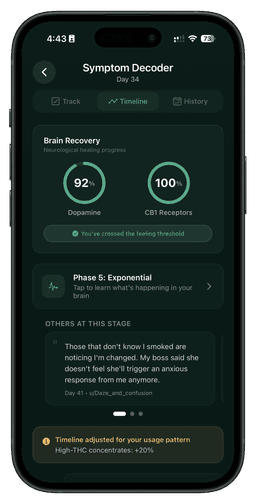
Track your progress
See your brain healing in real time
Klar tracks 47 withdrawal symptoms and visualizes your dopamine and CB1 receptor recovery day by day.
Related Symptoms
Medical Disclaimer: This content is for informational purposes only and does not constitute medical advice, diagnosis, or treatment. Always consult a qualified healthcare provider for medical guidance. If you are in crisis, call 988 (Suicide & Crisis Lifeline) or text HOME to 741741.