Headaches After Quitting Weed
Last updated: January 31, 2026
Headaches during cannabis withdrawal are caused by changes in cerebral blood flow, serotonin fluctuations, and general neurochemical readjustment.
20-30% of people quitting cannabis
Peaks day 3
~Peaks day 14
Recovery Timeline
| Metric | Value |
|---|---|
| Prevalence among quitters | 20-30% of people quitting cannabis |
| Typical onset | Day 1 |
| Peak intensity | Day 3 |
| Expected resolution | ~Day 14 |
| Total duration | 13 days (approximate) |
A dull ache behind your eyes. Pressure across your forehead. A throbbing that doesn’t respond to your usual remedies. Cannabis withdrawal headaches are common, usually mild to moderate, and typically one of the shorter-lived symptoms.
Why Quitting Weed Causes Headaches
Cannabis affects several systems involved in headache physiology:
- Cerebral blood flow changes. THC is a vasodilator — it widens blood vessels. During withdrawal, blood vessels in the brain temporarily constrict (rebound vasoconstriction), which can trigger tension-type or migraine-like headaches. This is similar to caffeine withdrawal headaches.
- Serotonin fluctuations. THC modulates serotonin activity. Withdrawal disrupts serotonin balance, and serotonin dysregulation is a known migraine trigger.
- Muscle tension. Withdrawal anxiety and stress cause jaw clenching, neck tension, and shoulder tightness — all of which refer pain to the head.
- Dehydration. If night sweats and reduced appetite are limiting your fluid and food intake, dehydration headaches compound the withdrawal headaches.
When Does It Start, Peak, and End?
- Onset: Day 1–2. Often one of the first physical symptoms.
- Peak: Days 2–4. Headaches are typically most intense during the same window as peak withdrawal.
- Resolution: Days 7–14. Most withdrawal headaches resolve within the first two weeks.
Headaches are one of the fastest-resolving withdrawal symptoms. If headaches persist beyond 3 weeks, they may have a different cause and should be evaluated by a healthcare provider.
What Actually Helps
1. Hydration
Drink at least 2–3 liters of water daily during the first two weeks. Dehydration from night sweats and reduced food intake amplifies headaches. Add electrolytes if you’re sweating heavily.
2. Over-the-Counter Pain Relief
Ibuprofen (400mg) or acetaminophen (500–1000mg) can take the edge off withdrawal headaches. Use as needed for the first week, but avoid daily use beyond 10 days to prevent rebound headaches from the medication itself.
3. Magnesium
Magnesium glycinate (400mg daily) is well-evidenced for headache prevention. Cannabis users are often magnesium-deficient, and supplementation during withdrawal can reduce headache frequency and intensity. It also helps with sleep and anxiety.
4. Neck and Jaw Release
Stress-related tension accumulates in the jaw (clenching), neck, and upper traps. Gentle stretching, massage, or a warm compress on the neck and temples can provide rapid relief for tension-type headaches.
5. Consistent Sleep Schedule
Irregular sleep worsens headaches. Even if insomnia is disrupting your sleep, maintain consistent wake and bed times. The regularity itself is protective against headaches, independent of total sleep hours.
When to Seek Professional Help
- Sudden, severe “thunderclap” headache (seek emergency care)
- Headaches accompanied by vision changes, confusion, or slurred speech
- Headaches worsening in severity over time (not improving)
- Persistent headaches beyond 3 weeks
SAMHSA National Helpline: 1-800-662-4357 (free, confidential, 24/7)
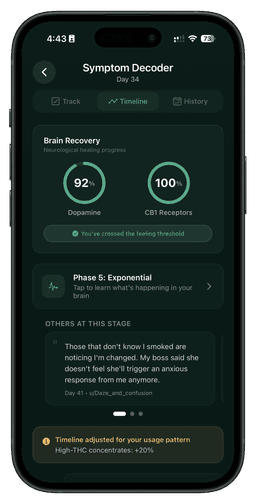
Track your progress
See your brain healing in real time
Klar tracks 47 withdrawal symptoms and visualizes your dopamine and CB1 receptor recovery day by day.
Related Symptoms
Medical Disclaimer: This content is for informational purposes only and does not constitute medical advice, diagnosis, or treatment. Always consult a qualified healthcare provider for medical guidance. If you are in crisis, call 988 (Suicide & Crisis Lifeline) or text HOME to 741741.