Weight Changes After Quitting Weed: Loss, Gain & Stabilization
Last updated: January 31, 2026
Weight fluctuations during cannabis withdrawal — initial loss followed by potential gain as appetite regulation normalizes.
30-40%
Peaks day 21
~Peaks day 45
Recovery Timeline
| Metric | Value |
|---|---|
| Prevalence among quitters | 30-40% |
| Typical onset | Day 1 |
| Peak intensity | Day 21 |
| Expected resolution | ~Day 45 |
| Total duration | 44 days (approximate) |
Cannabis profoundly affects appetite regulation through CB1 receptors in the hypothalamus. When you quit, your weight may shift in unexpected ways.
The Typical Pattern
Weeks 1–2: Weight loss. Appetite suppression and nausea reduce caloric intake. Some people lose 3–8 pounds in the first two weeks, mostly from reduced food and water intake.
Weeks 2–4: Stabilization or rebound. As appetite returns (and sometimes overshoots), weight stabilizes or begins recovering. Appetite rebound can cause weight gain beyond the initial loss.
Weeks 4–8: New baseline. Appetite regulation normalizes. Many long-term cannabis users find they settle at a slightly different weight than during active use — some lighter (without THC-driven overeating), some at the same weight.
What Helps
During Weight Loss Phase
- Eat calorie-dense foods even if appetite is low (nuts, avocado, smoothies)
- Small, frequent meals rather than 3 large meals
- Protein at every meal to maintain muscle mass
During Rebound Phase
- Eat mindfully — distinguish genuine hunger from emotional eating
- Maintain exercise routine (builds muscle, regulates appetite hormones)
- Do not restrict severely — your body is recovering and needs adequate nutrition
When to Seek Help
- Weight loss exceeds 10% of body weight
- You are unable to eat anything for more than 3 days
- Rapid weight gain is causing health problems
- You develop disordered eating patterns
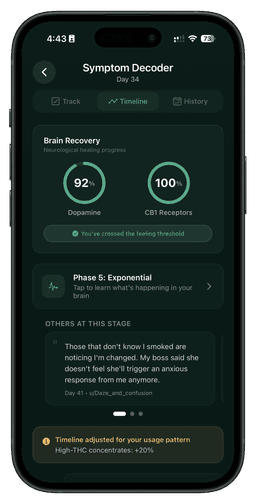
Track your progress
See your brain healing in real time
Klar tracks 47 withdrawal symptoms and visualizes your dopamine and CB1 receptor recovery day by day.
Related Symptoms
Medical Disclaimer: This content is for informational purposes only and does not constitute medical advice, diagnosis, or treatment. Always consult a qualified healthcare provider for medical guidance. If you are in crisis, call 988 (Suicide & Crisis Lifeline) or text HOME to 741741.