Vivid Dreams After Stopping Weed
Last updated: January 31, 2026
Intense, cinematic, sometimes disturbing dreams are a hallmark of cannabis withdrawal caused by REM sleep rebound after years of THC-suppressed dreaming.
40-50% of people quitting cannabis
Peaks day 10
~Peaks day 30
Recovery Timeline
| Metric | Value |
|---|---|
| Prevalence among quitters | 40-50% of people quitting cannabis |
| Typical onset | Day 3 |
| Peak intensity | Day 10 |
| Expected resolution | ~Day 30 |
| Total duration | 27 days (approximate) |
You just woke up from the most cinematic, detailed, emotionally intense dream of your life. Maybe it was terrifying. Maybe it was beautiful. Either way, it felt more real than anything you’ve dreamed in years. Welcome to REM rebound — one of the most distinctive and fascinating symptoms of cannabis withdrawal.
Why Quitting Weed Causes Vivid Dreams
To understand why this happens, you need to understand what THC does to your sleep architecture.
Sleep happens in cycles of roughly 90 minutes, alternating between non-REM stages (light sleep, deep sleep) and REM sleep (where dreams occur). THC suppresses REM sleep. It does this by reducing the time spent in REM and delaying REM onset. Many regular cannabis users report that they “don’t dream” — they do, but THC is cutting their dream time short.
When you quit, your brain compensates by increasing REM sleep dramatically. This phenomenon is called REM rebound. Your brain has been “missing” REM sleep for months or years, and it tries to catch up all at once. The result:
- Longer REM periods within each sleep cycle
- More dream cycles per night
- Dreams that are abnormally vivid, emotionally intense, and narratively complex
- Higher likelihood of nightmares or stress dreams
Research from the Journal of Abnormal Psychology confirms that REM rebound is a consistent feature of cannabis withdrawal, with dream intensity correlating with the duration and frequency of prior cannabis use.
When Does It Start, Peak, and End?
- Onset: Days 2–5. Dreams start becoming noticeably more vivid within the first week.
- Peak: Days 7–14. This is when dreams are most intense, most frequent, and most likely to include nightmares.
- Gradual improvement: Days 14–30. Dream intensity slowly normalizes, though dreams remain more vivid than your “baseline” while using cannabis.
- New normal: Days 30–60. Your REM cycles stabilize. Dreams continue — you’re simply experiencing normal dreaming again for the first time in a long time.
Some long-term heavy users report vivid dreaming persisting for several months. This is within the normal range and simply reflects a longer REM rebound period.
What Actually Helps
1. Reframe the Experience
Vivid dreams are a sign that your brain is healing. REM sleep is essential for emotional processing, memory consolidation, and neural repair. Your brain is catching up on critical maintenance it couldn’t do while THC was suppressing REM. The intensity of your dreams reflects the intensity of your brain’s recovery.
2. Dream Journaling
Keep a notebook by your bed. When you wake from an intense dream, write down the key images, emotions, and themes. This does two things: it externalizes the emotional content (reducing its hold on you) and over time reveals patterns that can provide genuine psychological insight.
3. Lucid Dreaming Techniques
REM rebound actually creates ideal conditions for lucid dreaming (becoming aware that you’re dreaming within a dream). Reality-testing habits — like checking your hands or trying to read text throughout the day — can carry into dreams and give you some control over nightmare content.
4. Process Nightmares During the Day
If you’re having recurring nightmares, use Image Rehearsal Therapy (IRT): during waking hours, reimagine the nightmare with a different, positive ending. Practice this new version before bed. Studies show IRT reduces nightmare frequency significantly.
5. Avoid Stimulation Before Bed
Violent movies, intense news, or heated arguments before bed become dream material. During REM rebound, your brain is processing emotional content more aggressively. Give it calmer material to work with.
When to Seek Professional Help
- Nightmares are causing you to fear going to sleep
- Dream content is related to trauma (withdrawal can resurface PTSD symptoms)
- You’re experiencing sleep paralysis frequently alongside vivid dreams
- Dream disturbances persist beyond 60 days with no improvement
SAMHSA National Helpline: 1-800-662-4357 (free, confidential, 24/7)
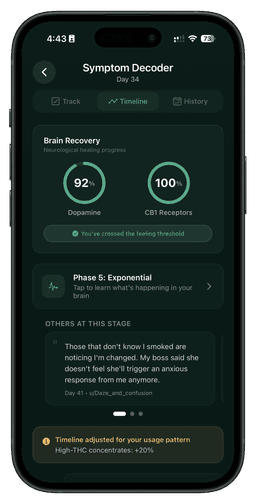
Track your progress
See your brain healing in real time
Klar tracks 47 withdrawal symptoms and visualizes your dopamine and CB1 receptor recovery day by day.
Related Symptoms
Related Timeline
Medical Disclaimer: This content is for informational purposes only and does not constitute medical advice, diagnosis, or treatment. Always consult a qualified healthcare provider for medical guidance. If you are in crisis, call 988 (Suicide & Crisis Lifeline) or text HOME to 741741.