Intense Emotions After Quitting Weed: Feeling Everything at Once
Last updated: January 31, 2026
Overwhelming emotional intensity after the initial numbness phase, as the endocannabinoid system and emotional processing circuits recover.
30-45%
Peaks day 30
~Peaks day 60
Recovery Timeline
| Metric | Value |
|---|---|
| Prevalence among quitters | 30-45% |
| Typical onset | Day 14 |
| Peak intensity | Day 30 |
| Expected resolution | ~Day 60 |
| Total duration | 46 days (approximate) |
You were numb. Then the dam broke. Suddenly you are crying at commercials, furious at minor inconveniences, overwhelmed with gratitude while walking the dog. The emotional intensity after quitting weed can be as unsettling as the numbness that preceded it.
Why It Happens
Cannabis blunts emotional processing. Both positive and negative emotions are dampened during active use. When your endocannabinoid system recovers and emotional circuits come back online, they often do so with a vengeance.
Think of it like circulation returning to a limb that fell asleep. The tingling is more intense than normal sensation. Your emotional processing system is doing the same thing — reawakening with heightened sensitivity before calibrating to a normal range.
This phase typically follows the emotional numbness period. Numbness (weeks 1–3) gives way to emotional flooding (weeks 3–8), which gradually settles into a healthy emotional range.
Timeline
- Onset: Days 14–21 (as numbness lifts)
- Peak: Days 21–40
- Settling: Days 45–60 as emotional regulation normalizes
What Helps
1. Let It Happen
Do not suppress the emotions. They are a sign of recovery. Crying, laughing, feeling angry — your brain is reconnecting with a full emotional range. This is genuinely good, even when it feels overwhelming.
2. Name the Emotion
Research shows that naming an emotion ("I feel angry" or "This is grief") activates the prefrontal cortex, which modulates the emotional intensity. It is called "affect labeling" and has strong evidence for emotional regulation.
3. Journaling
Writing about intense emotions processes them. Expressive writing has been shown to reduce emotional distress and improve immune function. Write without filtering or judging what comes out.
4. Physical Release
Intense emotions carry physical energy. Exercise, dancing, or even screaming into a pillow provides a physical outlet that prevents emotional buildup from becoming overwhelming.
When to Seek Help
- Emotions feel genuinely uncontrollable (not just intense)
- Intense emotions lead to self-harm or harm to others
- You cannot function at work or in relationships due to emotional instability
988 Suicide & Crisis Lifeline: Call or text 988
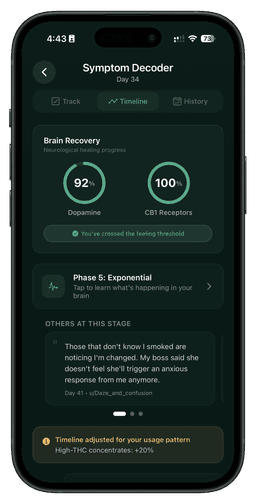
Track your progress
See your brain healing in real time
Klar tracks 47 withdrawal symptoms and visualizes your dopamine and CB1 receptor recovery day by day.
Related Symptoms
Related Timeline
Medical Disclaimer: This content is for informational purposes only and does not constitute medical advice, diagnosis, or treatment. Always consult a qualified healthcare provider for medical guidance. If you are in crisis, call 988 (Suicide & Crisis Lifeline) or text HOME to 741741.