Fatigue After Quitting Weed: Why You Feel So Tired
Last updated: January 31, 2026
Extreme tiredness and low energy during cannabis withdrawal, caused by dopamine depletion and disrupted sleep architecture.
35-45%
Peaks day 7
~Peaks day 21
Recovery Timeline
| Metric | Value |
|---|---|
| Prevalence among quitters | 35-45% |
| Typical onset | Day 2 |
| Peak intensity | Day 7 |
| Expected resolution | ~Day 21 |
| Total duration | 19 days (approximate) |
You quit weed expecting to feel sharper. Instead, you feel like you could sleep for a week. Fatigue during cannabis withdrawal is common, frustrating, and entirely explainable.
Why Quitting Weed Causes Fatigue
Three mechanisms drive withdrawal fatigue:
- Dopamine depletion: THC artificially boosted dopamine. Without it, your reward system is running on empty. Dopamine does not just affect motivation — it directly regulates energy and wakefulness. Low dopamine = low energy.
- Disrupted sleep: Even if you are sleeping, withdrawal insomnia means you are not getting restorative sleep. REM rebound fragments sleep architecture, so 8 hours in bed may produce 4–5 hours of actual rest.
- Adrenal stress response: Withdrawal activates your hypothalamic-pituitary-adrenal (HPA) axis. Your body is in a low-grade stress state, which is exhausting even without physical exertion.
When Does It Start, Peak, and End?
- Onset: Days 2–3. Often masked initially by anxiety and restlessness.
- Peak: Days 5–10. Fatigue is worst when sleep disruption is worst.
- Improvement: Days 14–21 as sleep normalizes and dopamine begins recovering.
What Actually Helps
1. Movement (Not Intense Exercise)
Counterintuitive, but gentle exercise reduces fatigue more effectively than rest. A 20–30 minute walk boosts endorphins and starts rebuilding natural dopamine pathways. Avoid intense workouts if you are severely fatigued — they can worsen exhaustion.
2. Sunlight Exposure
Morning sunlight (15–20 minutes within an hour of waking) resets your circadian rhythm, boosts cortisol at the right time, and improves daytime alertness. This directly counteracts the sleep-wake cycle disruption caused by withdrawal.
3. Nutrition
Your brain is rebuilding neurotransmitter systems and needs fuel. Prioritize protein (tyrosine, the dopamine precursor, is found in eggs, fish, nuts), complex carbohydrates for sustained energy, and iron-rich foods. Avoid sugar crashes.
4. Strategic Napping
If fatigue is severe, a 20-minute nap before 2pm can help without disrupting nighttime sleep. Set an alarm — longer naps worsen insomnia.
When to Seek Help
- Fatigue persists beyond 4 weeks with no improvement
- You cannot perform basic daily activities
- Fatigue is accompanied by severe depression
SAMHSA Helpline: 1-800-662-4357 (free, confidential, 24/7)
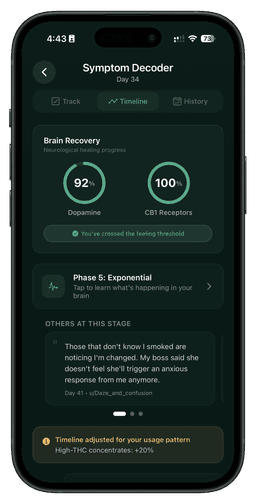
Track your progress
See your brain healing in real time
Klar tracks 47 withdrawal symptoms and visualizes your dopamine and CB1 receptor recovery day by day.
Medical Disclaimer: This content is for informational purposes only and does not constitute medical advice, diagnosis, or treatment. Always consult a qualified healthcare provider for medical guidance. If you are in crisis, call 988 (Suicide & Crisis Lifeline) or text HOME to 741741.