Derealization After Quitting Weed: When Nothing Feels Real
Last updated: January 31, 2026
Feeling detached from reality or that the world is not real during cannabis withdrawal, caused by dissociation and perceptual processing changes.
10-20%
Peaks day 10
~Peaks day 30
Recovery Timeline
| Metric | Value |
|---|---|
| Prevalence among quitters | 10-20% |
| Typical onset | Day 3 |
| Peak intensity | Day 10 |
| Expected resolution | ~Day 30 |
| Total duration | 27 days (approximate) |
The world looks slightly off. Like watching your life through a screen. Colors seem flat. Conversations feel scripted. You might look at your hands and feel like they do not belong to you. Derealization and depersonalization during cannabis withdrawal are less common but deeply unsettling symptoms.
Why It Happens
Derealization is a dissociative response to neurological stress. Several withdrawal mechanisms contribute:
- Endocannabinoid depletion: The ECS plays a role in sensory processing and emotional tagging of experiences. With depleted CB1 receptors, your brain processes reality without the normal emotional coloring.
- Anxiety-driven dissociation: Severe anxiety triggers dissociation as a protective mechanism. Your brain is essentially distancing you from overwhelming stress.
- Sleep deprivation: Extended sleep loss causes perceptual distortions and derealization in anyone, regardless of cannabis withdrawal.
- Prefrontal-limbic disconnection: Withdrawal can temporarily disrupt the integration between thinking (prefrontal) and feeling (limbic) brain areas, creating a sense of emotional detachment from experience.
Timeline
- Onset: Days 3–10
- Peak: Days 7—14
- Resolution: Days 21–30. Can occasionally persist longer in heavy users.
What Helps
1. Grounding Techniques
The 5-4-3-2-1 method: Name 5 things you see, 4 you can touch, 3 you hear, 2 you smell, 1 you taste. This forces sensory engagement and counteracts dissociation. Use it whenever derealization intensifies.
2. Physical Sensation
Hold ice cubes, splash cold water on your face, or do intense physical exercise. Strong physical sensations interrupt the dissociative state by grounding you in bodily experience.
3. Reduce Overthinking
Analyzing derealization makes it worse. "Am I going crazy?" loops amplify the dissociation. Remind yourself: this is a documented, temporary withdrawal symptom. It has a neurological cause and a predictable end.
4. Stay Social
Isolation worsens derealization. Being around other people — even if it feels strange — provides external reality anchoring.
When to Seek Help
- Derealization persists beyond 4–6 weeks
- You experience hallucinations (hearing or seeing things that are not there)
- Dissociation is so severe you cannot function safely
- You had pre-existing dissociative symptoms before cannabis use
988 Suicide & Crisis Lifeline: Call or text 988
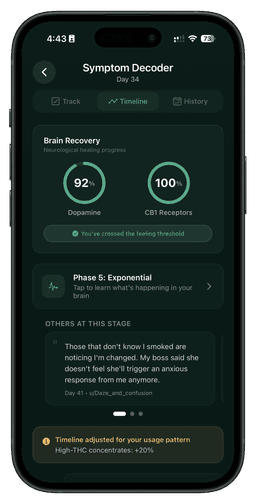
Track your progress
See your brain healing in real time
Klar tracks 47 withdrawal symptoms and visualizes your dopamine and CB1 receptor recovery day by day.
Related Symptoms
Medical Disclaimer: This content is for informational purposes only and does not constitute medical advice, diagnosis, or treatment. Always consult a qualified healthcare provider for medical guidance. If you are in crisis, call 988 (Suicide & Crisis Lifeline) or text HOME to 741741.